
Pembroke Pines Directory Collections
No single shelf contains a complete annual run for Pembroke Pines. The useful set is spread among Broward County Library, the State Library of Florida, the Library of Congress, FamilySearch, and county digital archives. Some sources are searchable online. Others require an onsite database, a catalog login, a staff request, or a visit to a reference floor. Exact edition years for the Main Library database and the Greater Hollywood title are not published, so call or write before planning a trip.
| Collection | Years | Where Held | Access |
|---|---|---|---|
| Searchable city directories | Exact run not published | Broward Main Library, fifth floor | Onsite database; ask staff |
| Florida city directories | Early 1900s to present | State Library of Florida | Reference use; holdings inquiry |
| Fort Lauderdale white and yellow pages | 1936-1963, selected 1971-1975 | Library of Congress | Digitized or microform; inspect community coverage |
| Polk’s Greater Hollywood Area | Edition years not exposed | FamilySearch catalog | Sign-in or affiliate access may apply |
| Federal census | 1790-1950 public | NARA and library databases | Named schedules through 1950 |
The table distinguishes a catalog record from a book that can be opened at home. A catalog may prove that a title exists while still requiring affiliate-library access. Telephone reels also serve several communities at once. Always photograph or save the title page, publication date, coverage statement, and abbreviation key before copying an entry.
Note: Ask staff for an edition-level inventory because the published library page does not list every year or publisher.
Search Pembroke Pines Directory Names
Pembroke Pines did not always appear under its current municipal label. A 1959 referendum was followed by officials taking office, the village was abolished that December, voters restored it in January 1960, and city status followed in 1961. Before those shifts, West Hollywood is a key locality term. A researcher who searches only “Pembroke Pines” can miss the same household in a regional book.
The FamilySearch catalog identifies a Polk’s Greater Hollywood Area title that names Dania, Hallandale, Miramar, Pembroke Park, and Pembroke Pines. The edition years were not exposed in the research, so do not assume a continuous run. Search the catalog title, then inspect the volume’s own locality list. Fort Lauderdale telephone reels can also include nearby communities even when the cover sounds city-specific.
| Before 1960 | Try West Hollywood and Hollywood-area titles. |
|---|---|
| 1959-1961 | Check village and city labels across adjacent editions. |
| Before 1974 | Search Hollywood Boulevard as well as Pines Boulevard. |
| Western growth | Expect later subdivisions to appear only after development reached them. |
Pembroke Pines Directory Research Desk
The strongest local access point is Broward Main Library in Fort Lauderdale. Its Business, Law and Government area on the fifth floor offers the searchable directory database. Periodicals holds older telephone directories on microfiche, complete local South Florida newspaper runs, and Historic Building Surveys. Staff retrieves microforms and accepts obituary or local-newspaper questions by phone, email, and mail.
The county’s genealogy resources also include in-branch Ancestry Library Edition, Fold3, Archives Unbound, Digital Sanborn Maps, historic Black newspapers, and other research databases. The three Pembroke Pines-area branches are useful database access points, but the downtown Main Library has the deeper directory, periodical, and archive fallback. A remote search should therefore move from online catalog, to branch database, to Main Library staff request, then to onsite microform.
The Broward history and genealogy page shows the range of local research tools available.
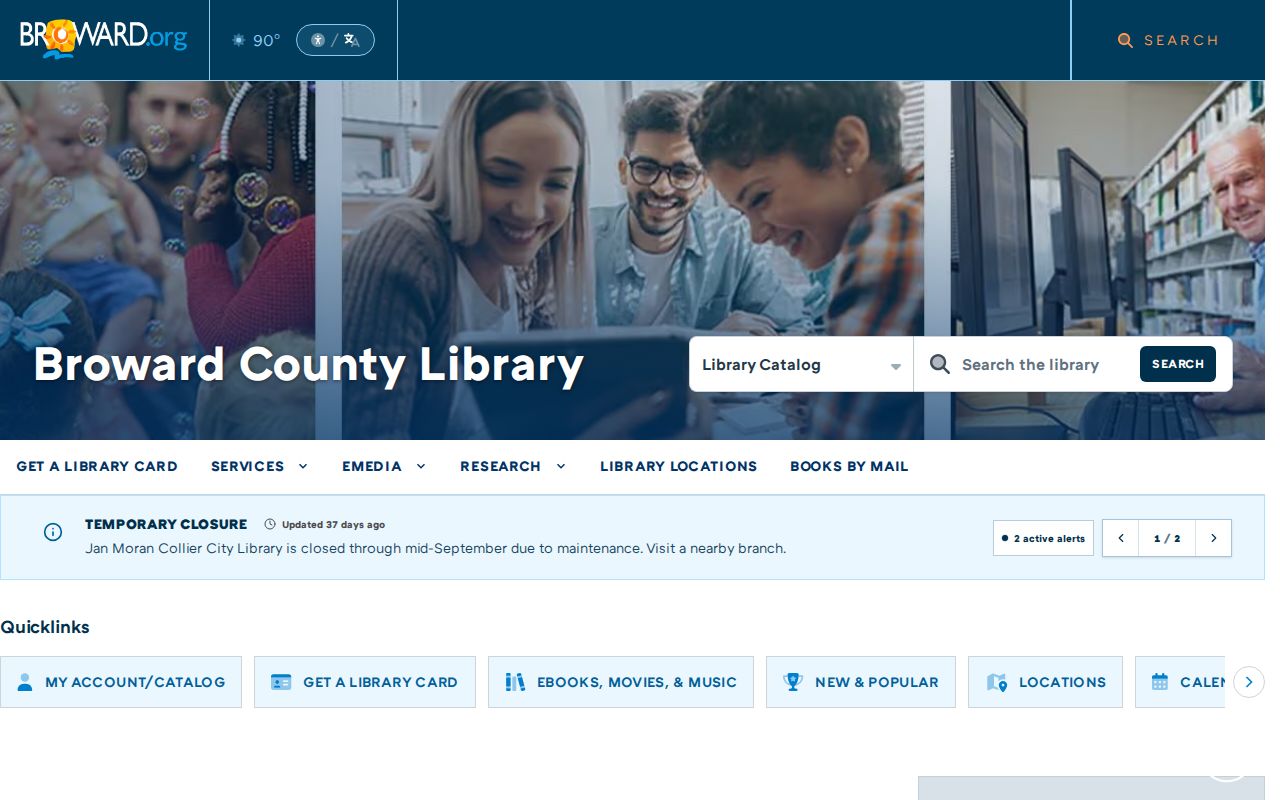
That resource screen is a starting point, not proof that a named person appears in a particular edition. Confirm access terms and title coverage with library staff.
Reading a Pembroke Pines Directory Entry
A printed entry can compress a household into one short line. Depending on publisher and year, it may show the listed person, spouse in parentheses, occupation or employer, residence address, and a mark for widow, owner, or renter. These conventions are not universal. The book’s abbreviation page controls the meaning, so a modern guess can turn a useful clue into an error.
- Transcribe the name, initials, punctuation, and spouse notation exactly.
- Copy the occupation or employer without expanding an abbreviation from memory.
- Record the residence and any separate business address.
- Note owner, renter, widow, or other marks only after checking the key.
- Save the title, year, page, and locality coverage with the entry.
No authoritative open sample for a Pembroke Pines resident was available. That gap matters. Use the inventory above as a checklist, not as a claim about what every Polk or telephone volume contains.
- Criss-cross directory
- An address-first section that reverses the usual name-first order and may show the listed occupant at a street number.
- Householder index
- A list arranged around households or household heads, whose exact form depends on the publisher.
- Abbreviation key
- The volume’s own legend for occupations, marital notes, address terms, and status marks.
- Publication lag
- The gap between when data was gathered and when the finished book reached readers.
Pembroke Pines Directory Archives Online
Directories become more useful when matched with dated images, oral histories, and local publications. The Broward County Library Digital Archives draws from 115 collections held by several county institutions. Its Broward County and Black Broward oral histories include memories reaching from the 1890s to the present. Rights, donor terms, copyright, and privacy can limit what is displayed online.
The digital archive interface provides a second route when a directory entry needs context.
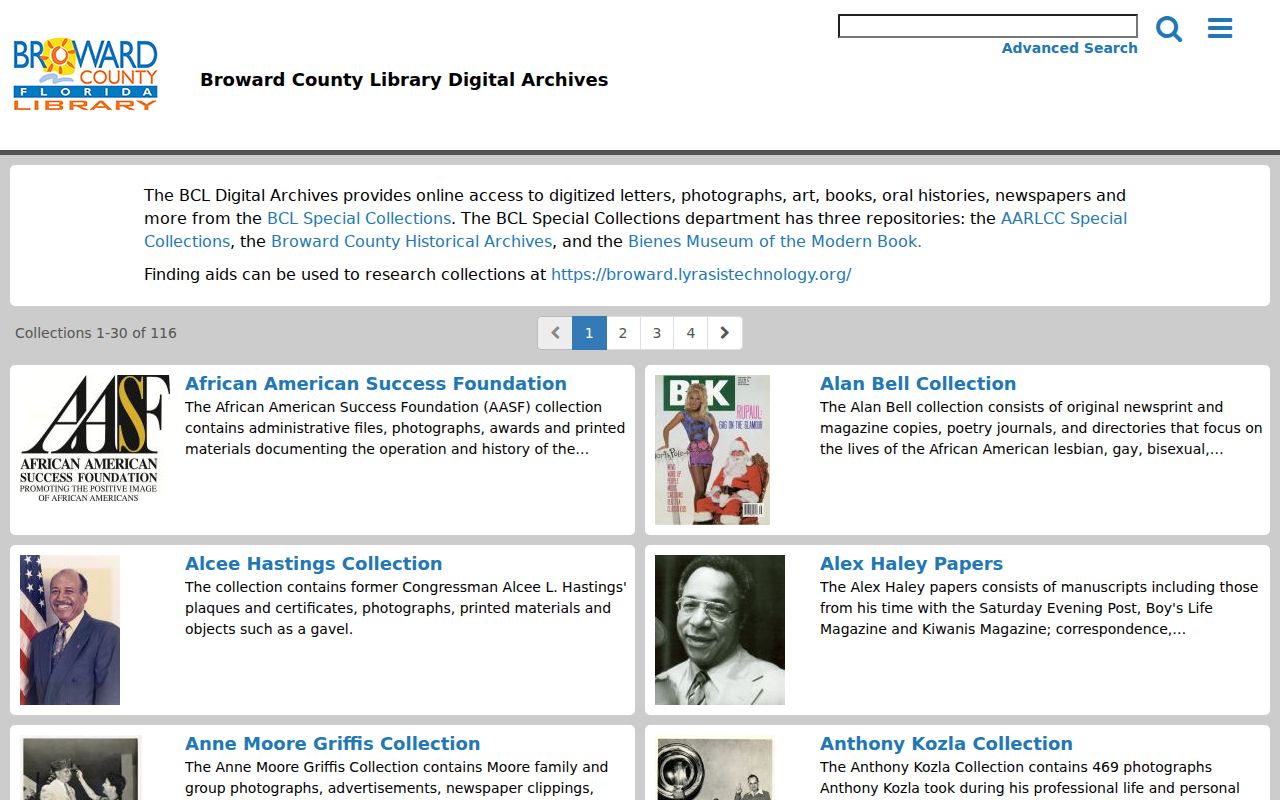
Search a surname, street, school, business, and neighborhood separately. A photo caption or oral-history transcript may preserve a spelling or place name that leads back to the right annual book.
For unpublished material, Broward Historical Archives sits on Main Library’s sixth floor. Finding aids can identify government and local-history holdings even when the item itself is not online. Reference contact Erin Purdy is listed at 954-357-6138.
Pembroke Pines Directory Story in Scrapbooks
The Pembroke Pines Historical Society collection began with newspaper scrapbooks assembled by Estelle and Walter Kipnis in 1954. Gerry Witoshynsky continued clipping in 1980. That run bridges the years before incorporation with later city growth, making it useful when a person, club, school, or business appears in a city directory but the brief entry says little else.
The scrapbooks matter because Pembroke Pines changed fast. The community had about 1,500 residents around 1960, grew west from the country-club and open-land era, and saw faster western development after Hurricane Andrew. An eastern address, a planned central community, and a far-west subdivision may therefore enter print sources in very different years.
A directory absence is not proof of absence from Pembroke Pines. The resident may be listed under a spouse or initials, filed under West Hollywood, omitted as a nonsubscriber, or living in a subdivision not yet covered by that edition. The scrapbook timeline helps test which explanation fits.
Pembroke Pines Directory Reel Years
The Library of Congress telephone collection supplies the clearest published year runs for regional directories. Fort Lauderdale white and yellow page reels cover June 1936 through August 1940, January 1941 through February 1947, August 1947 through August 1951, and several later spans through 1963. Selected directories also survive for 1971 through 1975.
Those dates do not guarantee that every reel includes Pembroke Pines or West Hollywood. Open the front matter and locality list before searching names. Regional phone books may file a subscriber under the postal community, while a deed uses a legal description and a municipal file uses city jurisdiction. For a boulevard address before 1974, search Hollywood Boulevard as well as the later Pines Boulevard name.
Note: A telephone listing identifies a subscriber at publication time, not every person who lived in the household.
Trace Pembroke Pines Directory Families
Annual or near-annual listings can fill the long gaps between federal censuses. The newest public named census schedule is 1950 because federal schedules remain closed for 72 years. Pairing a city directory with that census can establish a dated name and address, then reveal moves before the next decennial census becomes public.
- Find the earliest likely listing under Pembroke Pines, West Hollywood, or the relevant regional title.
- Check the prior and following editions, copying name forms, addresses, spouse notes, and occupations.
- Use the criss-cross section, if present, to inspect the address and nearby listed households.
- Pair 1950-and-earlier listings with the matching federal census and compare each person carefully.
- Use newspaper and obituary holdings to test a disappearance, then consult probate or property records when needed.
A missing name has several possible causes: a move, death, an unlisted number, a spouse-based listing, spelling variation, or publication lag. Compare at least three dated sources before choosing one explanation. If the search shifts to current address-based records, the Pembroke Pines street directory covers the modern parcel route without repeating the historical shelf.
The Broward Library genealogy portal shows the database entry points used for that cross-check.
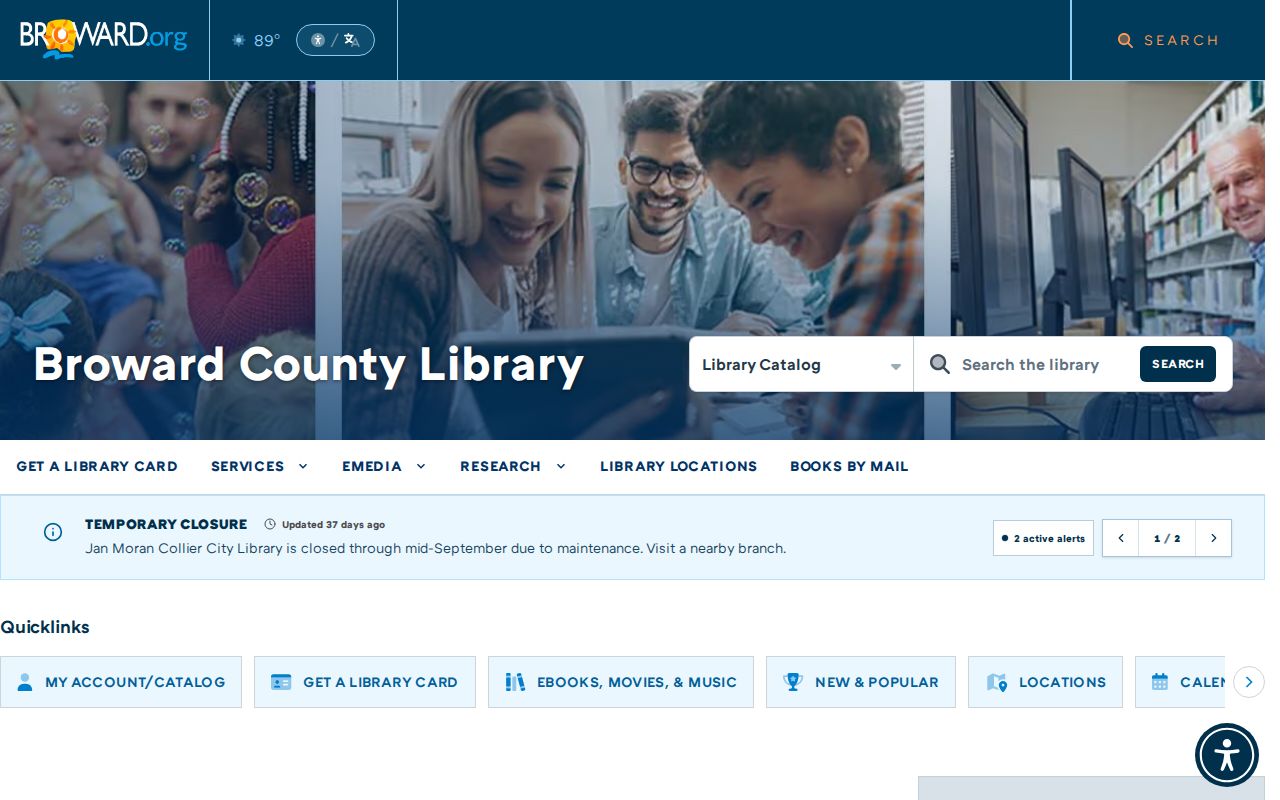
The library screen leads to research tools, while the cited edition and copied entry remain the evidence to preserve in family notes.